Call: (818) 952-5300
Text:(818)-796-3085
Clear the Canopy:
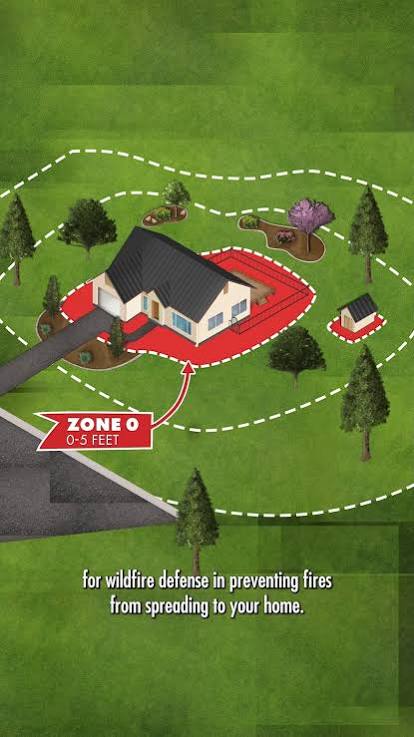
CAL FIRE requires property owners in high fire-threat areas to clear all tree branches within 10 feet of a chimney and maintain a 5-to-10-foot vertical buffer above roofs. Driven by Assembly Bill 3074, these accelerated rules formally establish Zone 0 (the 0-to-5-foot Ember-Resistant Zone). This standard targets windblown embers, which cause up to 90% of wildland-urban interface home ignitions.
Trimming overhanging limbs is no longer just a weekend chore. It is a mandatory step to protect your property, satisfy home insurance requirements, and avoid steep penalties.
1. The Core Demands: What the Law Requires
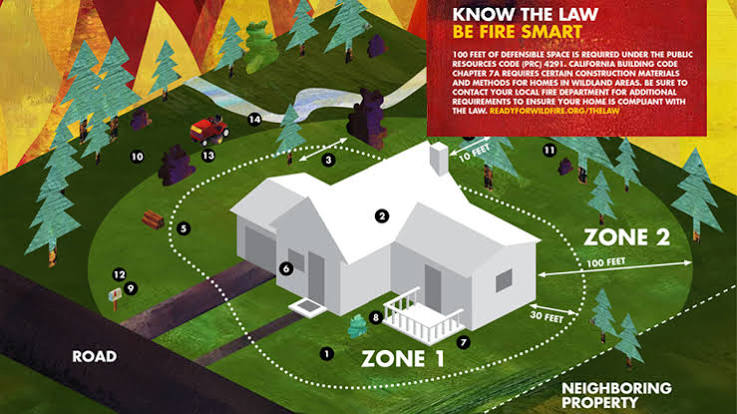
The California Board of Forestry and Fire Protection has formalized strict structural clearance rules. If you have mature trees near your home, your trimming checklist must hit these exact metrics:
- Chimney Clearance (10 Feet): You must remove all parts of any tree extending within 10 feet horizontally or vertically of a chimney or stovepipe outlet.
- Roofline Buffer (5 to 10 Feet): Tree canopies must be heavily pruned to provide 5 feet of clear vertical space above roof surfaces and eaves. For specific fire hazard severity zones and certain tree species, professional guidelines recommend or mandate up to a 10-foot clearance to prevent embers from trapping heat against the structure.
- Deadwood Elimination: You must completely cut and remove all dead, dying, or diseased portions of trees overhanging any part of a building.
- Ladder Fuel Removal: Ground fires easily climb low limbs into the upper canopy. You must prune large trees to keep branches at least 6 feet off the ground.
2. Why Overhanging Limbs Pose an Immediate Threat
Failing to maintain a clear line above your roof leaves your home highly vulnerable in three major ways:
Ember Traps
Wildfire embers can travel over a mile ahead of the actual flame front. When overhanging branches drop leaves and needles onto your roof, they fill your rain gutters with highly combustible tinder. A single ember landing in an uncleaned gutter can quickly ignite the entire roofline.
Radiant Heat and Direct Flame
When tree limbs physically touch or hang directly over shingles, they act as a physical fuel bridge. If the tree catches fire, the intense radiant heat will instantly crack windows and ignite the eave vents, destroying the home from the inside out.
3. How to Safely Execute Your Tree Clearance Project
Achieving compliance takes careful planning to preserve the health of your trees while hardening your home.
  [10-Foot Radius] ───>  ( Chimney )
                             |
  [5-10 Ft Vertical] ───> ═════════ ( Roof Line )
                             |
  [6-Foot Clearance] ───> ┌──┴──┐   ( Ground Level )
Hire Flintridge Tree Care a Certified, Insured Arborist
Do not attempt to cut massive limbs above a roof yourself. Falling branches can easily crush your structure or compromise overhead power lines. Ensure your contractor holds a valid California license. Ask them to write a official compliance letter upon completion to present to your home insurance carrier.
Focus on Crown Raising
Instead of topping the tree—which harms its structure—instruct your arborist to practice “crown raising.” This removes only the lowest limbs and the specific overhanging branches threatening the roofline. This keeps the tree healthy while creating a clean, fire-safe gap.
Maintain Year-Round Cleanliness
Trimming the limbs is only half the battle. You must regularly clear away any fresh leaf accumulation from your roof valleys, decks, and rain gutters.
Watch this walk-through from California fire officials to see how a fully prepared, fire-hardened Zone 0 looks in practice:
4. Insurance and Code Enforcement Consequences
Enforcement of these guidelines is stricter than ever. CAL FIRE and local agencies conduct seasonal inspections.
- Failed Inspections: Property owners who fail to clear vegetation within the required timelines will receive a formal notice to correct violations. Continued non-compliance triggers expensive, mandatory county abatement fees and fines.
- Insurance Non-Renewals: The California FAIR Plan and private insurance carriers now regularly request photographic proof of defensible space compliance. Failing to clear branches from your roofline is one of the fastest ways to trigger a policy non-renewal.
Take a proactive approach by visiting the CAL FIRE Defensible Space Hub to check your local compliance schedule, schedule an inspection, or download home-hardening checklists.
Call: (818) 952-5300
Text:(818)-796-3085

Flintridge Tree Care will make you Fully Compliant with CAL FIRE:
Call: (818) 952-5300
Text:(818)-796-3085
Here are three actionable, high-priority suggestions to help you successfully complete your roofline clearance project and stay fully compliant with CAL FIRE:
1. Request an Inspection Pre-Approval
Before hiring an arborist, request a free, official defensible space inspection directly through the CAL FIRE Defensible Space Hub. A visiting inspector will explicitly mark the exact branches overhanging your roof that must come down. This ensures you do not waste money cutting down healthy, compliant limbs, or worse, miss a hidden hazard that could fail your final evaluation.
2. Time Your Trimming to Protect Tree Health
To prevent spreading devastating tree diseases, schedule your trimming based on your tree species rather than waiting for fire season. For example, California native oaks should only be pruned during the dry summer months (July to September) when the beetles that transmit oak wilt are inactive. Conversely, most pine trees are best trimmed in the dead of winter to avoid attracting destructive bark beetles.
3. Take Mandatory “Before and After” Photos for Your Insurance
Document the entire trimming process with clear photographs taken from the same vantage point in your yard. Private insurance carriers and the California FAIR Plan heavily rely on photographic proof to renew policies in high-risk zones. Email these high-resolution images to your insurance agent immediately upon project completion to create a paper trail proving your home is hardened.